Employers preview
Why hire people with disabilities?

Expand your market
One in four Americans live with a disability. With an estimated $200 billion in discretionary income, this population—as well as their family and friends appreciate businesses that recognize and accommodate those with disabilities.
Gain a competitive edge
Companies cite high levels of motivation and attention to work quality as reasons why employees with disabilities contribute to business results. People with disabilities are innovators, community leaders and successful in businesses of all types.
Reduce turnover
Increase your talent pool
Finding qualified, committed employees can sometimes be difficult. People with disabilities offer a ready pool of ideal workers. Proven problem-solvers, they demonstrate creativity and adaptability in confronting challenges and getting jobs done.
Qualify for financial incentives
The federal Work Opportunity Tax Creditopens a new window and Disabled Access Credit are available to employers that hire people who traditionally have faced barriers to employment. In addition, the Architectural Barrier Removal Tax Deduction encourages businesses to remove office and transportation obstacles that limit the mobility of persons with disabilities. Learn more about financial incentives available to Nevada businesses.
Enhance your company culture
Employees with disabilities help companies create diverse cultures that attract desirable talent pools. Demonstrate social responsibility by creating an inclusive workplace and hiring people with disabilities, including youth, maturing workers and veterans.
business assistance program
VR Nevada offers a full-service business assistance program for business owners and employers that helps them gain a critical advantage in today’s highly competitive marketplace. We provide professional consultation services to assist business owners and employers in developing short- -and long-term strategies regarding disability-related issues. We also encourage individuals with disabilities maximize their employment opportunities by helping them develop the skills that today’s businesses need.
We make it easy
Our no-cost services are designed to aid you in staff education and finding the right match to fill your staffing needs, including the following:
- Free assistance with recruitment and job matching.
- Pre-screened and qualified applicants.
- Pre-employment training programs.
- Employee matches based on your business needs.
- Soft skill development.
- Customized employee training strategies.
- Access to on-the-job training funds.
- Reliable technical assistance and referrals.
- Quality assurance through follow-along employer and employee support for the first three months.
We offer staffing solutions in many industries including:
health care and medical services
information technology
tourism, gaming and entertainment
logistics and operations
manufacturing
retail and customer service

Total Employer Contacts
2025-2026

Direct Employer Meetings
2025 – 2026

Outreach Events and Tours
2025 – 2026

People trained in inclusive employment practices
2025 – 2026

Workforce integration and training
Hiring employees with disabilities allows businesses to demonstrate their commitment to workforce diversity, equity and inclusion. It also aligns entities that receive federal funding with federal requirements related to the employment of people with disabilities. We can assist employers with no-cost training on a number of topics related to the successful integration of people with disabilities into their companies.
Our staff is available to meet with your hiring department to explain how we actively help recruit, onboard and retain employees that match your business needs. We also provide consultation to employers on the assistive equipment and software that some workers with disabilities need.
Accommodations
Under the Americans with Disabilities Act (ADA), employers are required to provide reasonable accommodations to qualified individuals with disabilities in order to enable them to perform essential job functions. The specific accommodations needed will vary depending on the individual and their unique circumstances. It’s important for employers to engage in an interactive process with employees to identify and implement effective accommodations that allow them to perform the essential functions of their jobs.
Providing accommodations allows employers to hire diverse talent, optimize productivity, and increase employee retention. VR Nevada can help employers meet the goals of the ADA.
We are not involved in ADA compliance or enforcement.

Tax and other benefits
Common credits and deductions
Proud Partners of VR Nevada
An initiative that recognizes and celebrates employers who demonstrate a strong commitment to inclusive hiring practices. The initiative highlights organizations that lead by example in employing people with disabilities, promoting diversity, and creating accessible, welcoming workplaces. Through Proud Partners of VR Nevada, exemplary efforts are honored and shared to encourage inclusive employment across the state.
Proud Partner Goodwill of Southern Nevada
We had the privilege of visiting Goodwill of Southern Nevada to present them with our Disability Inclusion Partner Award! We were honored to recognize their exemplary efforts in hiring people...
Proud Partner Home Depot
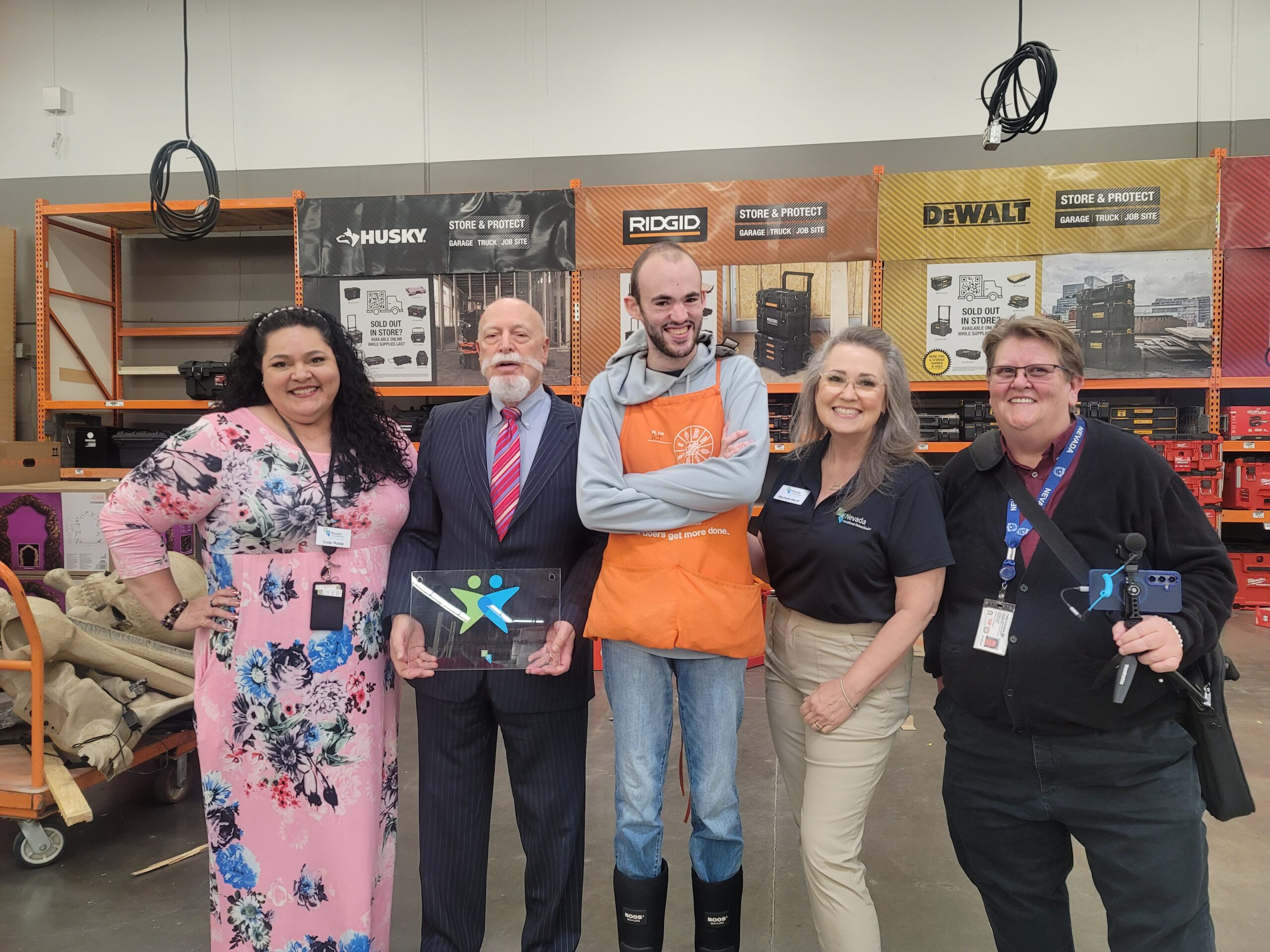
We had the privilege of visiting the West Reno Home Depot to present them with our Disability Inclusion Partner Award! We were honored to recognize their exemplary efforts in hiring people with disabilities, truly leading...
Proud Partner Saint Marys
Today, we had the privilege of visiting Saint Mary's Hospital in Reno to present them with our Disability Inclusion Partner Award! A huge thank you to VR Nevada staff members Ken Pierson,...
Proud Partner Terribles
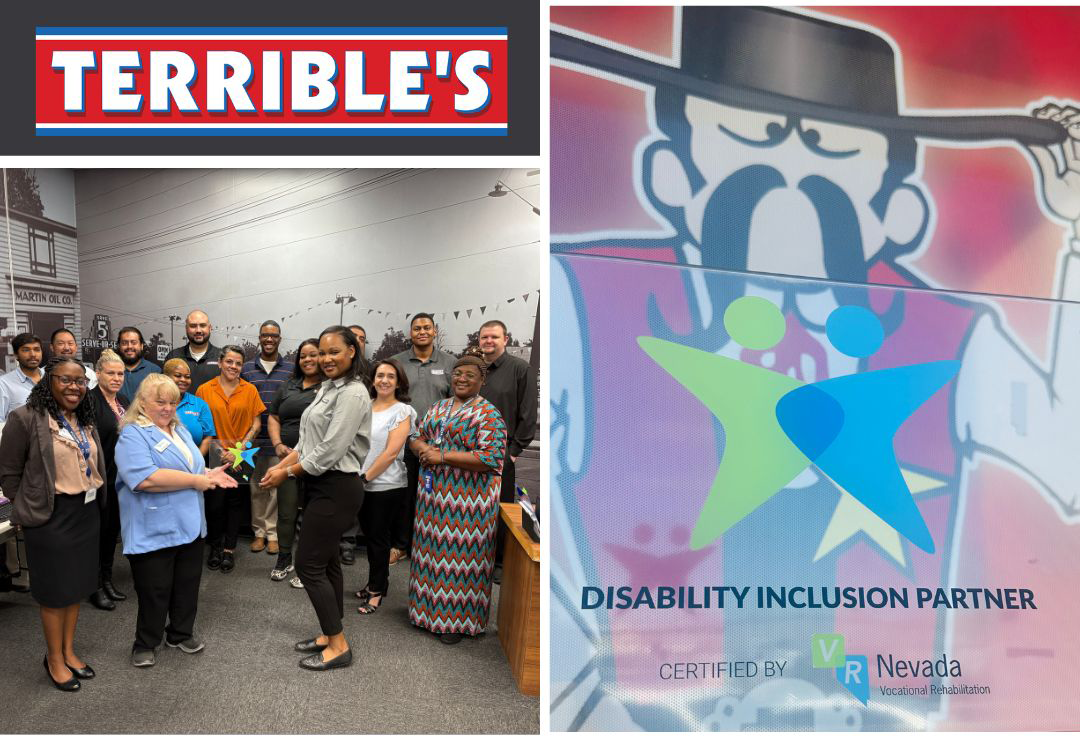
We had the privilege of visiting Terrible's Employment Center in Las Vegas to present them with our Disability Inclusion Partner Award! Erica Brown and Trina Bourke of VR Nevada presented the plaque to Ms. Kiki...
Proud Partner Raleys
We had the privilege of visiting Raley's in Reno to present them with our Disability Inclusion Partner Award! Mat Dorangricchia from VR Nevada honored Amanda Starkel (HR Business...
Proud Partner FedEx
We had the privilege of visiting FedEx in Sparks, Nevada to present them with our Disability Inclusion Partner Award! VR Nevada Rehab Manager, Mat Dorangricchia presented a plaque to...
Proud Partner Goodwill of Southern Nevada
We had the privilege of visiting Goodwill of Southern Nevada to present them with our Disability Inclusion Partner Award! We were honored to recognize their exemplary...
Frequently Asked Questions
1. Hiring People with Disabilities
2. Accommodations & Costs
Budget and logistics are incredibly common pain points for hiring managers who assume accommodations are complex and expensive.
3. Performance & Accountability
Employers often worry about workplace fairness, safety, and productivity standards.
4. Workplace Culture & Integration
Employers Contact Us
Chief, Office of Disability Employment Policy